
222 lines
4.5 KiB
Markdown
222 lines
4.5 KiB
Markdown
---
|
||
title: C语言-5
|
||
date: 2022-12-20 20:02
|
||
tags: [C语言, 笔记]
|
||
categories: 笔记
|
||
thumbnail: "https://t.alcy.cc/fj"
|
||
---
|
||
|
||
## 打开与关闭文件
|
||
|
||
### 1、用fopen打开文件
|
||
|
||
- fopen(文件名,使用文件方式)
|
||
|
||
```c
|
||
fopen("D:\\date\\Mystudio\\demo.txt","r+");
|
||
fopen("D:/date/Mystudio/demo.txt","r+"); //绝对路径
|
||
```
|
||
|
||
- fopen函数的返回值是只要操作文件(demo.txt)的指针,若出错,将返回一个空指针(NULL)。
|
||
|
||
- 因此,一般是将fopen函数返回值赋给一个指向文件的指针变量。
|
||
|
||
```c
|
||
FILE *fp; //定义一个文件指针
|
||
//打开一个文件,"r+"表示可读可写的模式打开
|
||
fp = fopen("D\\date\\Mystudio\\demo.txt","r+");
|
||
if(fp==NULL)
|
||
printf("文件demo打开失败");
|
||
else
|
||
printf("文件demo打开成功");
|
||
fclose(fp); //关闭文件
|
||
```
|
||
|
||
### 2、用fclose关闭文件
|
||
|
||
- fclose(文件指针);
|
||
|
||
```c
|
||
fclose(fp);
|
||
```
|
||
|
||
- 如不关闭文件就结束程序可能会丢失数据。
|
||
|
||
- fclose函数也会返回一个值,当成功执行了关闭为文件操做,返回值为0,否则返回EOF(-1);
|
||
|
||
## 顺序读写数据文件
|
||
|
||
### 向文件读写字符
|
||
|
||
#### 1、fgetc(fp) 从fp指向的文件读入一个字符
|
||
|
||
- 读成功则返回所读的字符,失败则返回u文件结束标志EOF(-1);
|
||
|
||
```c
|
||
char c=fgetc(fc);
|
||
```
|
||
|
||
#### 2、fputc(ch.fp); 把字符ch写道文件指针变量fp所指向的文件中
|
||
|
||
- 输出成功,则返回值就是输出的字符,失败就会返回EOF(-1);
|
||
|
||
#### 3、feof(fp)函数用来判断文件是否结束
|
||
|
||
- 如果遇到文件结束,函数feo(fp)的值为非零值,否则为0
|
||
|
||
```c
|
||
char c;
|
||
c = fuputc(ch.fp)
|
||
while(!feof(fp))
|
||
{
|
||
printf("%c",c);
|
||
c = fputc(ch,fp);
|
||
}
|
||
//输出文件中的所有字符
|
||
```
|
||
|
||
### 向文件读写字符串
|
||
|
||
#### 1、fgets(str,n,fp)从fp指向的文件读如一个长度为(n-1)的字符串
|
||
|
||
- 读成功则返回地址str,否则返回NULL;
|
||
|
||
```c
|
||
FILE *fp;
|
||
char c[15];
|
||
fp = fopen("D:/date/Mystudio/demo.txt","r+");
|
||
fgets(c,15,fp);
|
||
print("%s",c);
|
||
```
|
||
|
||
#### 2、fputs(str,fp)把str指向的字符串写道文件指针变量fp所指向的文件中
|
||
|
||
- 输出成功则返回 0 ,否则返回非0值
|
||
|
||
```c
|
||
FILE *fp;
|
||
char c[15]={"Hello Linux."};
|
||
fp = fopen("d/date/Mystdio/demo.txt","r+");
|
||
fputs(c,fp);
|
||
```
|
||
|
||
### 用格式化方式读写文本
|
||
|
||
#### fprint(文件指针,格式字符串,输出列表)格式化输出字符
|
||
|
||
```c
|
||
FILE *fp;
|
||
fp = fopen("D;/date/Mystudio/demo.txt","r+");
|
||
int i =5;
|
||
float f = 6.5;
|
||
fprint(fp,"i = %d,f = %6.2f",i,f);
|
||
```
|
||
|
||
#### 2、fcanf(文件指针,格式字符串,输出列表)格式化读入字符
|
||
|
||
```c
|
||
FILE *fp;
|
||
fp - fopen("D:/dete/Mystudio/demo.txt","r+");
|
||
int i;
|
||
float f;
|
||
fscanf(fp,"%d%f",&i,&f);
|
||
printf("%6.2f",i+f);
|
||
```
|
||
|
||
### 用二进制方式向文件读写一组数据
|
||
|
||
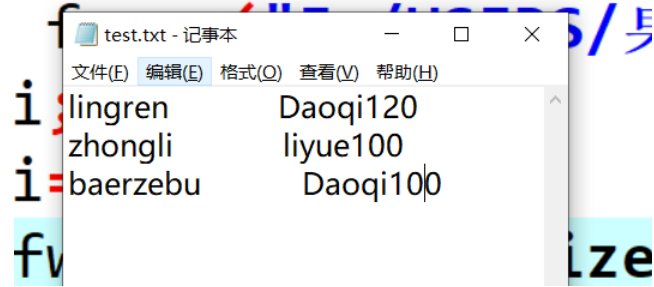
#### 1、fwrite(butter,size,count,fp);向文件写数据块
|
||
|
||
| 名字 | 解释 |
|
||
| ------ | -------------- |
|
||
| butter | 地址 |
|
||
| size | 字节数 |
|
||
| count | 要写多少数据块 |
|
||
| fp | FILE类型指针 |
|
||
|
||
```c
|
||
#include <stdio.h>
|
||
#include <stdio.h>
|
||
|
||
struct Student
|
||
{
|
||
char name[20];
|
||
char addr[20];
|
||
}s1[3]={
|
||
{"lingren","Daoqi120"},
|
||
{"zhongli","liyue100"},
|
||
{"baerzebu","Daoqi100"},
|
||
};
|
||
int main()
|
||
{
|
||
FILE *fp;
|
||
fp = fopen("E:/USERS/桌面文件/test.txt","r+");
|
||
int i;
|
||
for(i=0;i<3;i++)
|
||
fwrite(&s1[i],sizeof(struct Student),1,fp);
|
||
fclose(fp);
|
||
|
||
wreturn 0;
|
||
}
|
||
```
|
||
|
||
|
||
|
||
#### 2、fread(buffer,size,count,fp); 从文件中读数据块
|
||
|
||
### 五、随机读写数据文件
|
||
|
||
#### 1、rewind函数 使文件位置标记指向文件开头
|
||
|
||
#### 2、fseek(文件类型指针,位移量,起始点) 改变文件位置标记
|
||
|
||
```c
|
||
fseek(fp,0,SEEK_SET); //光标移动到文件开头后往后偏移0个字节的位置
|
||
#include <stdio.h>
|
||
#include <stdlib.h>
|
||
struct Student
|
||
{
|
||
char name[10];
|
||
char addr[10];
|
||
}s1[4]={
|
||
{"lingren","Daoqi120"},
|
||
{"zhongli","liyue100"},
|
||
{"baerzebu","Daoqi100"},
|
||
};
|
||
int main()
|
||
{
|
||
FILE *fp;
|
||
fp = fopen("E:/USERS/桌面文件/test.txt","r+");
|
||
int i;
|
||
for(i=0;i<3;i++)
|
||
fwrite(&s1[i],sizeof(struct Student),1,fp);
|
||
fseek(fp,sizeof(struct Student),SEEK_SET);
|
||
fread(&s1[3],sizeof(struct Student),1,fp);
|
||
printf("%s,%s",s1[3].name,s1[3].addr);
|
||
fclose(fp);
|
||
return 0;
|
||
}
|
||
```
|
||
|
||
### 六、文件读写出错检测
|
||
|
||
#### 1、ferror(fp) 检测是否出错
|
||
|
||
```c
|
||
#include<stdio.h>
|
||
int main(void)
|
||
{
|
||
FILE* fp;
|
||
fp = fopen("demo.txt","w");
|
||
fgetc(fp);
|
||
if (ferror(fp))
|
||
{
|
||
printf("读取出错\n");
|
||
printf("%d\n",ferror(fp));
|
||
clearerr(fp);
|
||
printf("%d\n",ferror(fp));
|
||
}
|
||
fclose(fp);
|
||
return 0;
|
||
}
|
||
``` |